
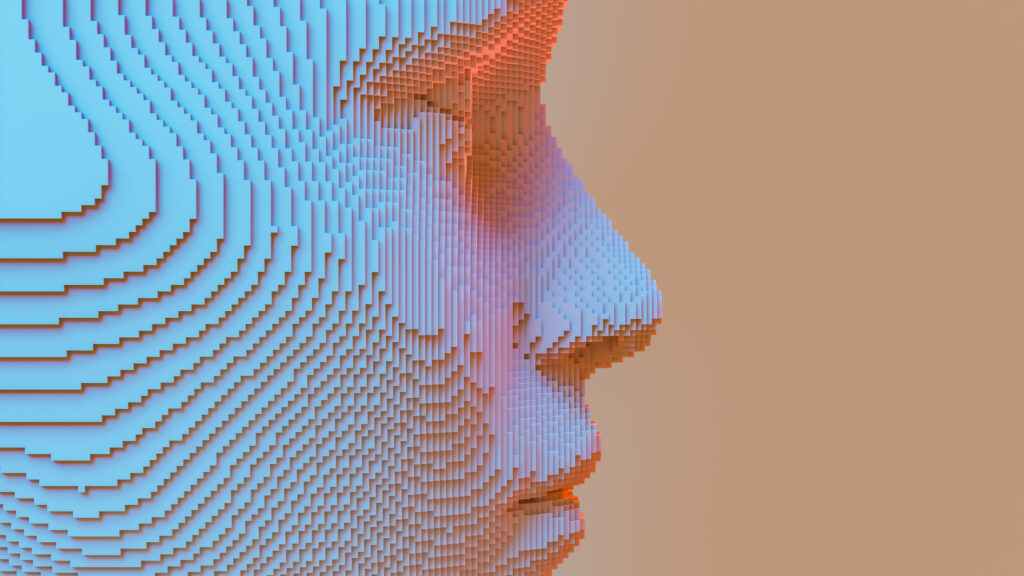
If you are a graphic designer, you might want to stop reading now. The company OpenAI launched in January 2021 an artificial intelligence model (DALL·E) capable of generating images from texts and now we’re already on the third version. Let us explain how it works.
What is DALL·E?
DALL·E broke new ground as the first creative artificial intelligence model capable of generating images from texts. In other words, it combines both an understanding of natural language with the generation of realistic images.
But DALL·E’s artistic talents don’t end with a simple snail drawing. If you wanted, it could generate multiple harp-shaped snail illustrations, or something more bizarre than you could even imagine. Just provide a description and it will generate a number of alternatives.
It can generate images of anything you can think of. And when we say anything, we mean absolutely anything. This model can:
- Transform existing images
- Create anthropomorphic animals and objects
- Combine concepts which are seemingly unrelated
- Represent text
Where does the name ‘DALL·E’ come from?
The name DALL·E is a combination of the surrealist painter Salvador Dalí and WALL·E, the PIXAR robot.
Why does it represent such a breakthrough?
Until 2021, artificial intelligence was able to generate images based on ones it had seen before. For example, using a dog database, we could train an AI model to draw a picture of a dog. Similarly, we could use a plant database and train the model to generate an image of a plant.
But DALL·E goes much further.
An avocado-shaped chair?
On its blog, OpenAI explains how DALL·E 3 works through some very diverse and quite surreal examples. Here is a sample of them:
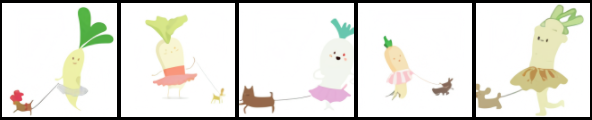
- An illustration of a baby daikon radish in a tutu walking a dog. Could the human mind come up with something like that? We’re not sure, but DALL·E certainly could.
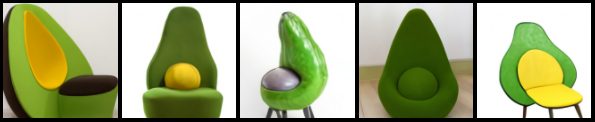
- An armchair in the shape of an avocado. This image has spread widely on social media, and many media outlets have used it as a headline due to its popularity.
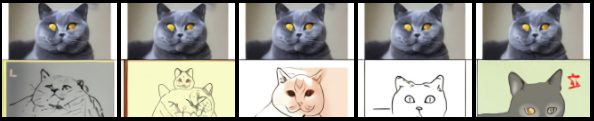
- The exact same cat on the top as the sketch on the bottom.
- A store sign with the word “OpenAI” on it. Very interesting for business owners.
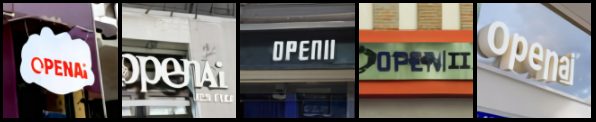
Let’s not forget that these results have been both imagined and created by artificial intelligence. It has been worth our time going in to play around with the examples published by OpenAI. Although it’s still not possible to enter free text, we can experiment with some of the terms.
How do you achieve all this?
It’s no surprise that these developments are the work of OpenAI, an artificial intelligence company formerly owned by Elon Musk which aims to promote AI for the benefit of society.
We have already seen some of the advancements from this San Francisco based company in the form of the GPT-2, GPT-3, and GPT-4 models.
As such, we can assume that these developments required significant backing. Here are some figures on the DALL·E model:
- 12 million parameters
- 1,280 tokens (256 for text and 1024 for images)
AI image generation in life sciences
Image generation tools like DALL·E can also have applications in life sciences and scientific communication. Researchers and medical teams often need to create visual explanations of complex concepts for presentations, publications, or educational materials.
AI generated illustrations can help visualize biological processes, research concepts, or scientific ideas more quickly, supporting clearer communication in fields such as biotechnology, healthcare, and clinical research. As AI in life sciences continues to evolve, image generation tools may become useful assistants for creating visuals that help explain complex scientific information.
The future of illustration
OpenAI has not yet published an article detailing the results, but for now we have this article. Unlike what they released with GPT-3 in 2020, this model came with no public or private beta.
Although the company acknowledges some limitations and certain human intervention during training, OpenAI still produces surprising results. Many are already talking about a revolution in the world of illustration and photography. While this does not mean the end of graphic design, it does suggest the field will need to adapt.
Today it’s images, but in the future it could be videos. We should proceed with caution, as such progress can be a double edged sword. However, its arrival seems inevitable and OpenAI is determined to prove it.
What’s next? Narrativa will keep you informed.
About Narrativa
Narrativa Agentic AI solutions unlock a faster, smarter future for life sciences organizations, helping them to efficiently produce complex, high-volume documentation for regulatory and commercialization workflows. By automating content creation, Narrativa delivers greater speed, accuracy, and consistency—while ensuring full compliance in highly regulated environments.
Narrativa Navigator Platform provides secure and specialized Agentic AI-powered automation features. It includes complementary user-friendly tools such as the Medical Authoring Companion for CSR and Protocol generation, BioStat Developer for AI Agents for TLF generation and SDTM and ADaM dataset generation, Narrative Pathway, and Redaction Scout, which operate cohesively to transform clinical data into submission-ready documents for regulatory and commercialization. From database to delivery, pharmaceutical sponsors, biotech firms, and contract research organizations (CROs) rely on Narrativa to streamline workflows, decrease costs, and reduce time-to-market across the clinical lifecycle and, more broadly, throughout their entire businesses.
Explore www.narrativa.com and follow on LinkedIn, Facebook, Instagram, and X.