

AI trends in Marketing: what to expect
AI trends in Marketing: what to expect

AI Trends
AI Trends
AI Trends
By Sofía Sánchez González
2026 is here. Time flies, but not as fast as advances in artificial intelligence: if you blink, you will miss a new breakthrough or a new company emerging in the AI space. That is why we bring you AI trends in Marketing and Media for 2026: what to expect. So you are not caught off guard, and you do not miss a thing. We have consulted our AI experts at Narrativa, and these are their predictions.
AI agents will dominate the conversation (what a surprise, right?)
As if they had not already dominated it enough in 2025, 2026 is shaping up to be the year of agentic AI. But what are AI agents and agentic AI? You may be wondering if you have been living under a rock all this time. Do not worry, at Narrativa we help you understand the concept.
An AI agent is a small software program that relies on the use of language models (GPT, Claude, Gemini, or other tools you use in your day to day work) to complete a VERY specific task.
Example: AI agent for campaign performance reporting
An AI agent for marketing can automatically generate the performance summary of a digital campaign from dashboards and analytics tools. The agent checks that the numbers in the text match the underlying data and links each insight to its source (platform, metric, or report). The result is a draft ready for human review.
That is, the agent does NOT manage the entire campaign, but rather takes care of one specific part of the process. It is highly specialized: it does only one thing, but it does it very well.
Agents are changing the game right now. Language models have improved so much that they all now have reasoning capabilities, something DeepSeek impressed us with and that is now standard across the board.
Language models are already incredibly good, they hallucinate less, and prompts need to be less and less precise. This is fundamental for building good agents, which in turn are supported by functions.
For example, in media outlets, the function of retrieving real time audience and content performance metrics. The result will be the correct figures based on the article, platform, and time window. If you ask the model, How many unique readers did our top article generate on mobile yesterday?, the model calls the function. The model does not calculate the metric itself; it determines how to call the function. The model output is captured, the actual query to the analytics or CMS system is executed, and that value becomes the final answer.
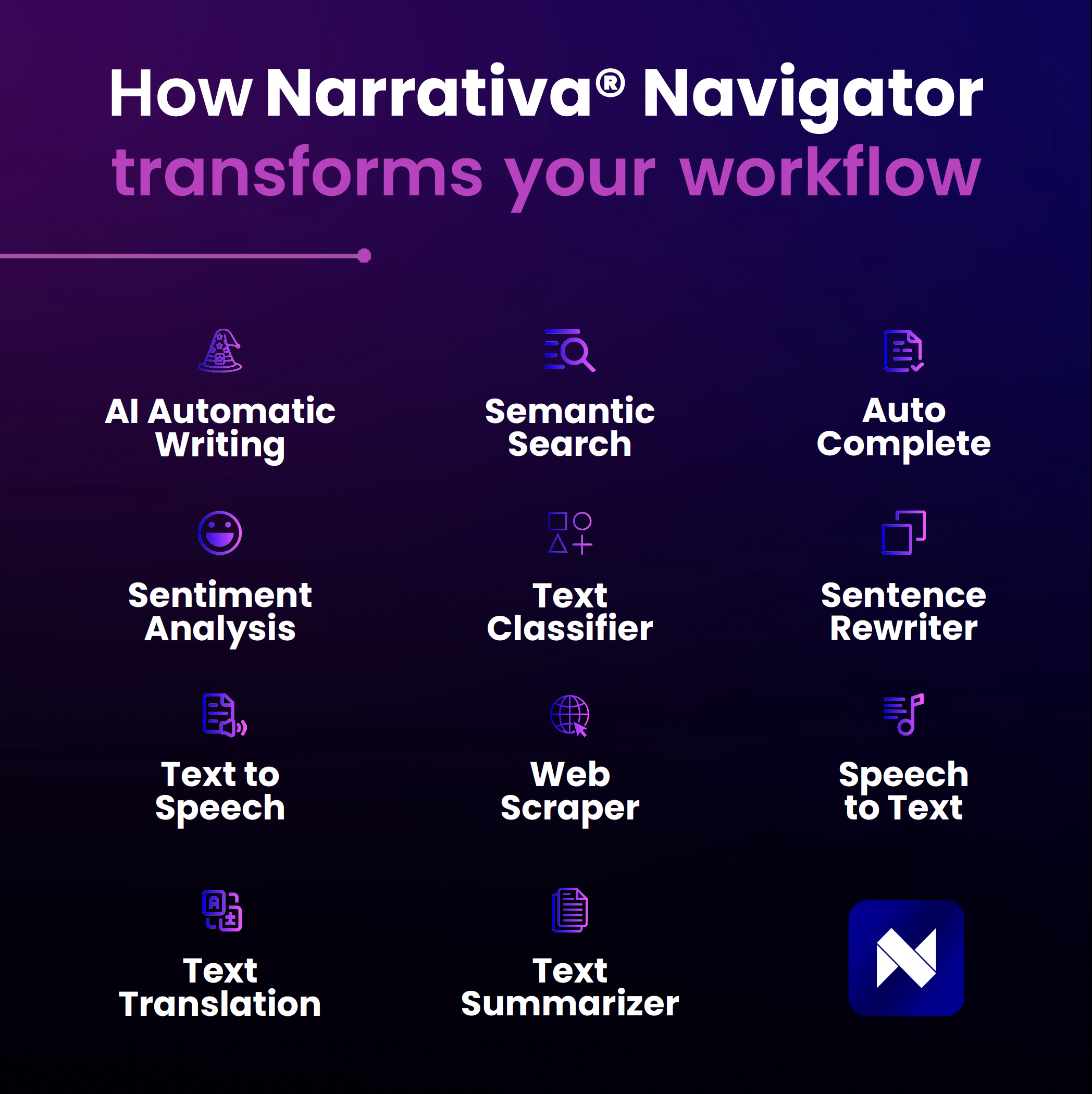
What advantages do agents have?
Language models no longer give the direct answer, but rather how to obtain the answer. And what advantages do agents have over traditional software?
- Greater flexibility, with much less rigidity when it comes to programming.
- A much higher level of precision is achieved when a good agent system is in place, as hallucinations are reduced.
We recommend keeping a close eye on the progress of agents in 2026. Any task performed on a computer in the Marketing or Media sector is susceptible to being automated with agents, freeing up valuable time for strategy and creativity.
Verticalization will be fundamental just to survive
Why is 2026 the year of verticalization? One of the problems with artificial intelligence systems is that there are solutions created by companies that work, but do not scale. What does this mean?
It means that these AI solutions work in small or controlled cases, such as pilots or one off projects, but cannot grow when complexity, data volume, number of brands, campaigns, or operational requirements increase.
And in Marketing and Media, where complexity is driven by multiple channels, formats, audiences, and markets, it is not possible to have a good solution if it is not scalable. When you need a human to constantly intervene to adapt outputs, validate data, or fix inconsistencies, that is a bad sign.
So what do AI companies need in order to succeed in Marketing and Media? To deeply understand the real problems teams face, and therefore offer a verticalized solution.
A clear example is an AI solution that generates marketing content or reports from performance data. In a pilot, it may work well for a single campaign with constant expert supervision, but it becomes unviable when a company needs to manage dozens of campaigns in parallel, across regions, channels, and audiences. At that point, if each output requires manual adjustments, reviews, and human corrections, the solution does not scale.
In Marketing and Media, where speed, consistency, and brand alignment are critical, AI is only useful if it is verticalized: it understands channels, KPIs, brand guidelines, tone of voice, and approval workflows. Without this deep domain knowledge, the technology may work, but it will not survive in large scale production.
Can you prove your value? ROI will be critical
Marketing and media teams no longer buy promises or endless pilots. In 2026, only solutions that demonstrate sustained economic and operational impact in production, at scale, will survive.
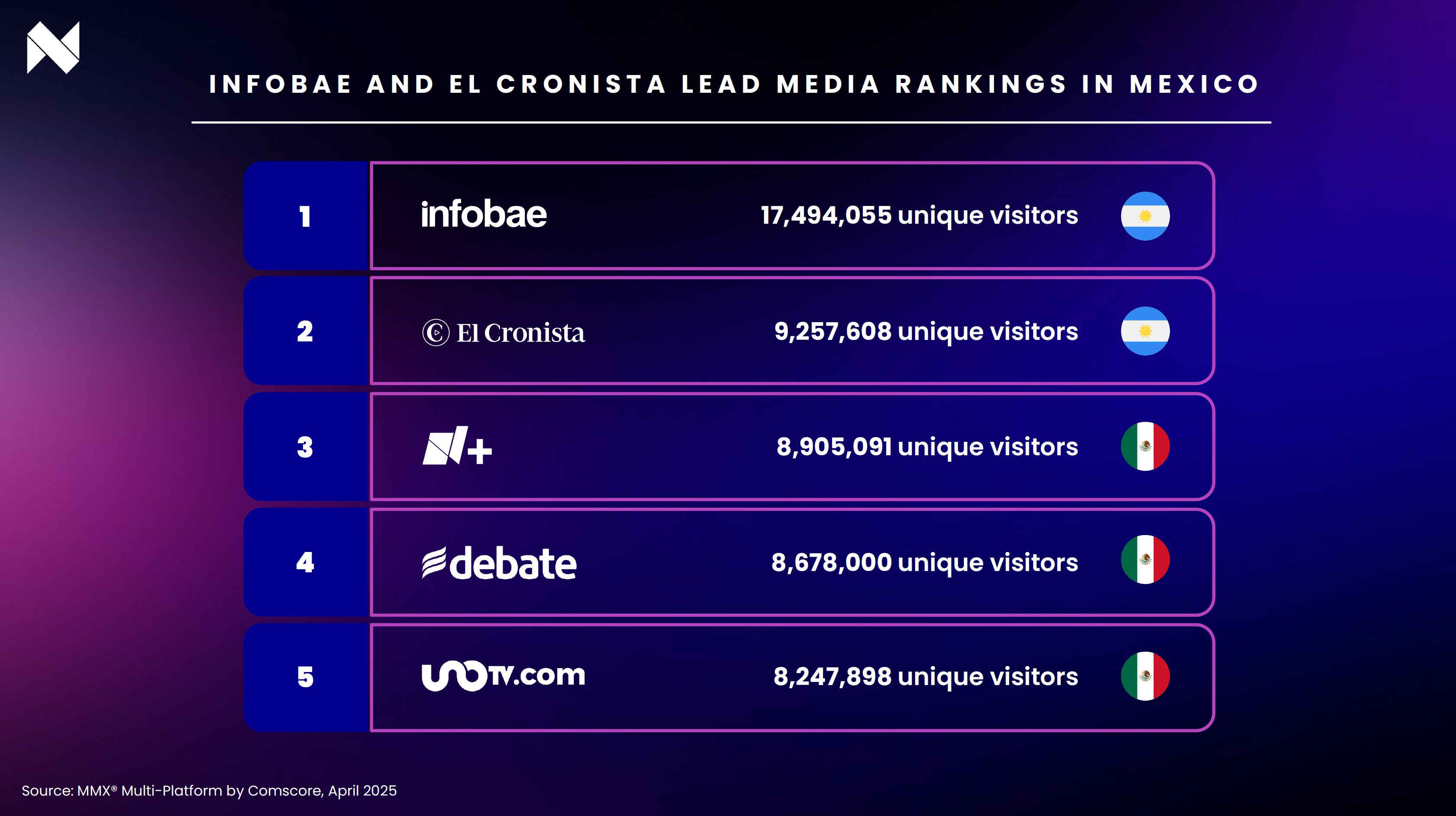
The two media outlets we work with through Narrativa® Navigator, Infobae and El Cronista, now lead the ranking of the most read publishers in Mexico, according to Comscore, the audience measurement company.
For many years, innovation in artificial intelligence remained at a more theoretical level. But companies no longer invest in AI for innovation’s sake; they invest for measurable and sustainable results in real operations.
ROI in AI is no longer measured only in isolated time savings, but in clear operational metrics:
- Faster campaign and content production cycles
- Less rework due to errors or inconsistencies
- Reduced dependence on highly specialized resources
- The ability to scale output without linear cost increases
In Marketing and Media, where speed to market and relevance directly impact performance, these indicators are critical.
Solutions that show, through real data, that they can operate reliably in regulated environments, at scale, and with consistent quality are increasingly well positioned for success in 2026. If ROI depends on constant human intervention or manual configurations for each use case, the return is diluted and the solution ceases to be viable at scale.
In summary…
In 2026, the conversation around artificial intelligence shifts away from technology itself and toward real business impact. AI agents, verticalization, and demonstrable ROI are not independent trends, but parts of the same shift: moving from solutions that impress in demos to systems that operate reliably in production.
In fast moving sectors such as Marketing and Media, only platforms capable of scaling, integrating into critical workflows, and generating sustained, measurable value will survive.
About Narrativa
Narrativa® is the global leader in generative AI content automation. Through the no-code Narrativa® Navigator platform and the collaborative writing assistant, Narrativa® Sidekick, organizations large and small are empowered to accelerate content creation at scale with greater speed, accuracy, and efficiency.
For companies in the life sciences industry, Narrativa® Navigator provides secure and specialized AI-powered automation features. It includes complementary user-friendly tools such as Clinical Atlas, Narrative Pathway, R-Developer for TLFs, and Redaction Scout, which operate cohesively to transform clinical data into submission-ready regulatory documents. From database to delivery, pharmaceutical sponsors, biotech firms, and contract research organizations (CROs) rely on Narrativa® to streamline workflows, decrease costs, and reduce time-to-market across the clinical lifecycle and, more broadly, throughout their entire businesses.
The dynamic Narrativa® Navigator platform also supports non-clinical industries such as finance, marketing, and media. It helps teams drive measurable impact by creating high-quality, scalable content on any topic. Available as a self-serve SaaS solution or a fully managed service, built-in AI agents enable the production, refinement, and iteration of large volumes of SEO-optimized news articles, engaging blog posts, insightful thought leadership pieces, in-depth financial reports, dynamic social media posts, compelling white papers, and much more.
Explore www.narrativa.com and follow on LinkedIn, Facebook, Instagram, and X. Accelerate the potential with Narrativa®.