

Breaking the internal white space in clinical trials
Breaking the internal white space in clinical trials

Clinical Trials
Clinical Trials
Clinical Trials
By Sofía Sánchez González
The internal white space between clinical teams
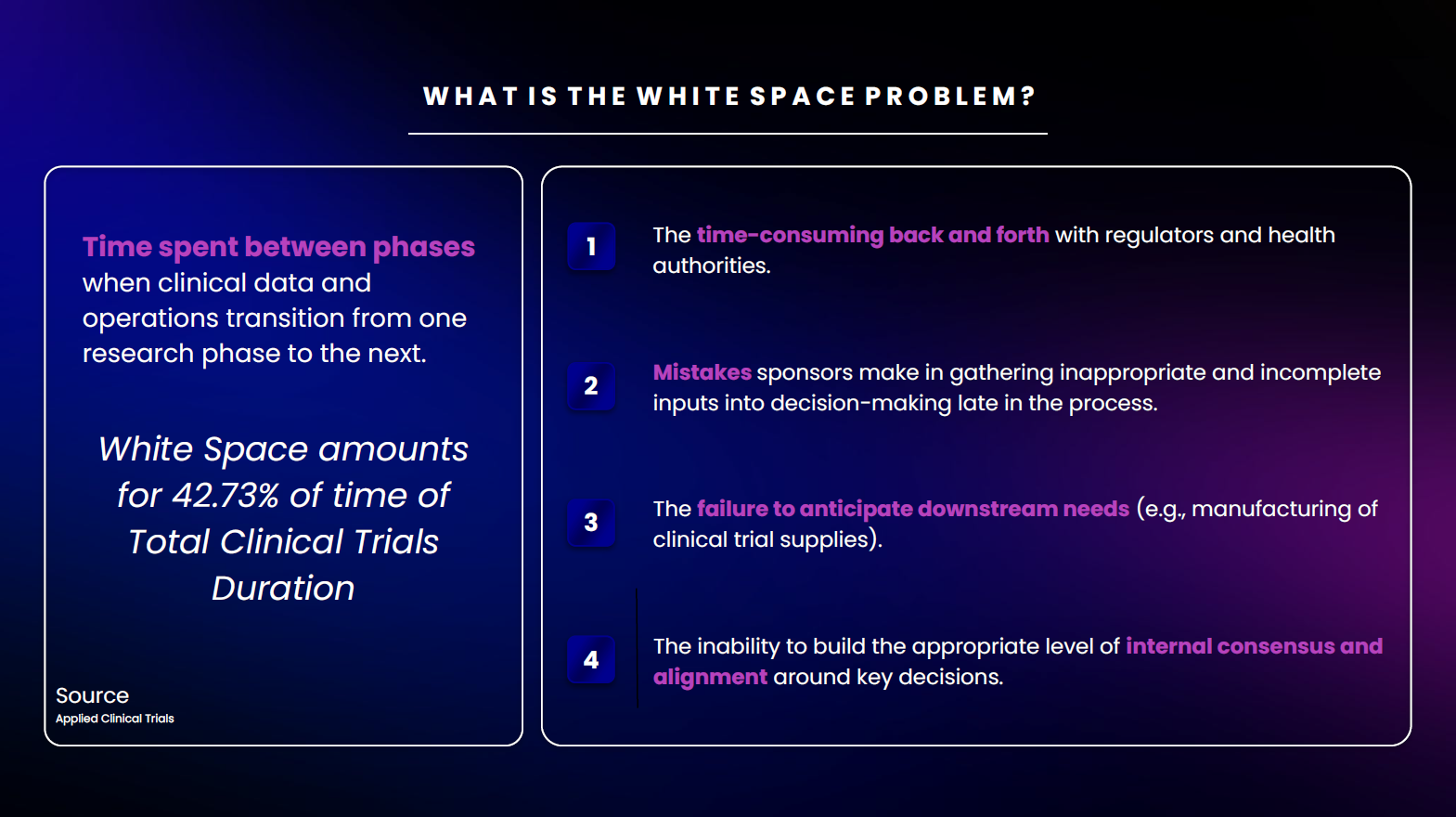
In clinical trials, the term white space often conjures images of delays during the study start-up phase. However, another equally critical form of white space exists within clinical development organizations themselves. This internal white space refers to the gaps in communication, coordination, and documentation that occur between the specialized teams responsible for delivering a clinical trial. These gaps can lead to inefficiencies that hinder the overall progress of clinical trials.
Each team, from biostatistics and data management to medical writing, regulatory affairs, clinical operations, and project management, plays a crucial role by contributing essential inputs to the trial lifecycle. Despite their significance, these teams frequently operate in silos, using separate systems and workflows. Consequently, information must constantly traverse departmental boundaries through manual processes, document exchanges, and repeated review cycles.
This disjointed communication results in valuable time being lost in interpretation, alignment, and document preparation before work can progress to the next stage, ultimately impacting the trial’s timeline and effectiveness.
Streamlining collaboration with AI
Agentic AI platforms like Narrativa offer a promising solution to streamline collaboration and accelerate clinical reporting workflows. By automating data transformation and standardizing documentation formats, AI systems can significantly reduce the internal communication white space. This automation enables faster decision-making and improved efficiency by ensuring that information flows seamlessly between departments.
For instance, clinical trial automation can transform complex statistical data into structured narratives, making it easier for medical writers to create clinical study reports and regulatory submissions. This not only speeds up the documentation process but also enhances accuracy and consistency across various documents. AI-driven platforms can also facilitate real-time updates and feedback, reducing the need for multiple review cycles and minimizing the risk of errors.
The documentation bottleneck
Clinical trial documentation is a complex process that involves multiple stakeholders and numerous stages before it is finalized. For example, when producing clinical study reports, safety narratives, or regulatory submissions, the following steps are typically involved:
- Biostatisticians generate statistical outputs and tables, providing the raw data needed for analysis.
- Medical writers translate these outputs into structured narratives, ensuring that the information is clear and comprehensible.
- Project managers coordinate reviews and timelines across teams, ensuring that each stage of the process is completed on schedule.
- Clinical and regulatory stakeholders perform multiple review cycles to ensure compliance with regulatory standards and scientific accuracy.
Each step in this process requires interpretation, clarification, and alignment between teams. Without structured systems to manage these exchanges, valuable time is lost in:
- Reformatting data outputs to fit documentation requirements.
- Clarifying statistical interpretations to ensure accurate representation.
- Waiting for feedback from multiple stakeholders, which can lead to bottlenecks.
- Updating documents across several versions, increasing the risk of errors and inconsistencies.
These communication gaps can significantly delay reporting timelines and increase the workload of highly specialized teams, ultimately affecting the trial’s success.
Reducing administrative burdens
Internal collaboration inefficiencies also create a heavy administrative burden. Studies show that clinical operations and medical writing teams spend most of their time on repetitive documentation and coordination tasks instead of engaging in higher-value scientific work. Much of this effort involves:
- Preparing documentation from structured data, which can be time-consuming and prone to errors.
- Aligning inputs from multiple departments to ensure consistency and accuracy.
- Managing version control and document updates, which can be challenging without standardized processes.
- Responding to iterative feedback cycles, which can delay progress and increase frustration.
This internal white space slows down reporting, increases operational costs, and contributes to frustration among clinical teams. By streamlining processes and reducing administrative burdens, teams can focus on more strategic and scientific tasks.
How agentic AI can reduce cross-team white space
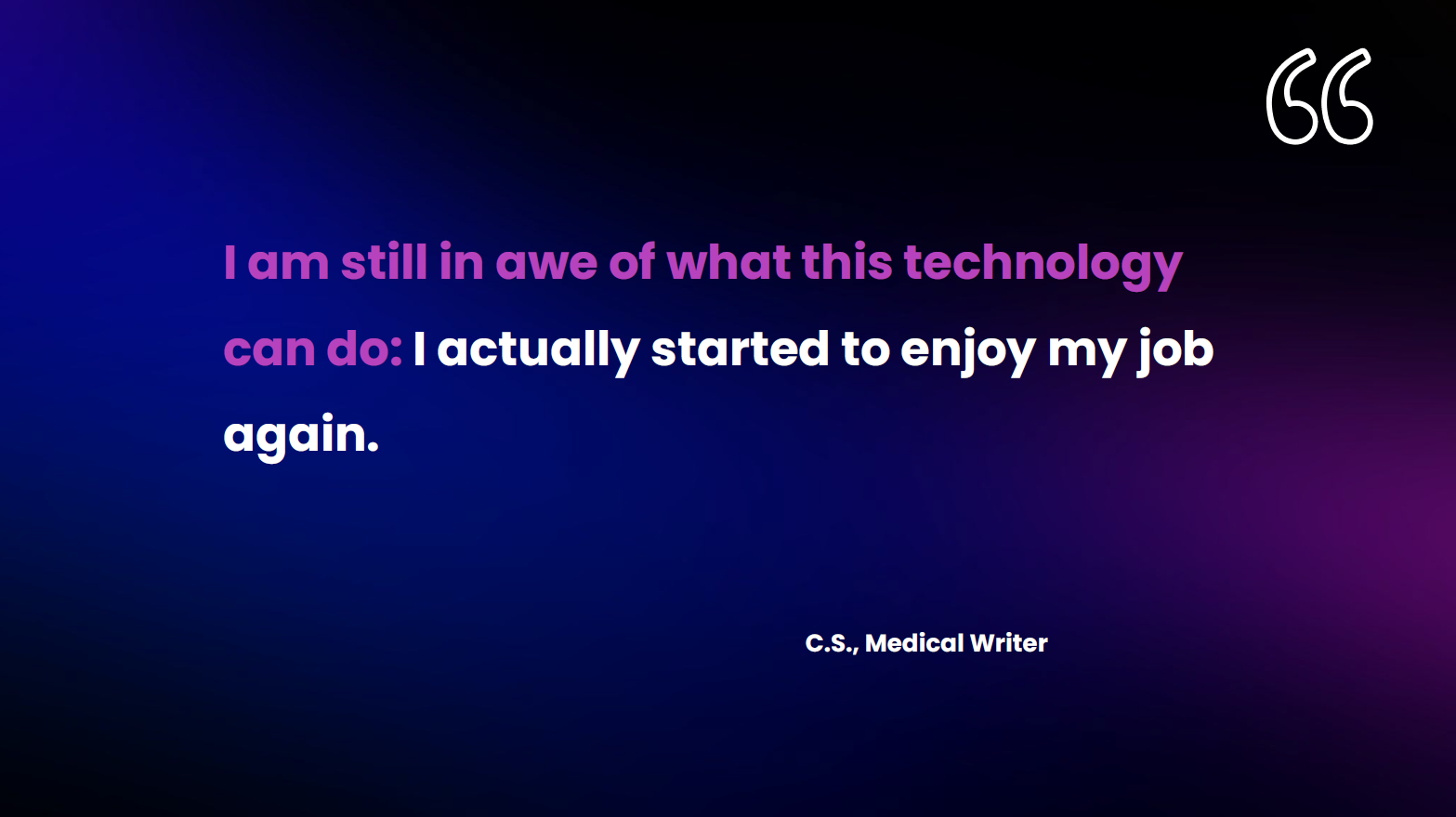
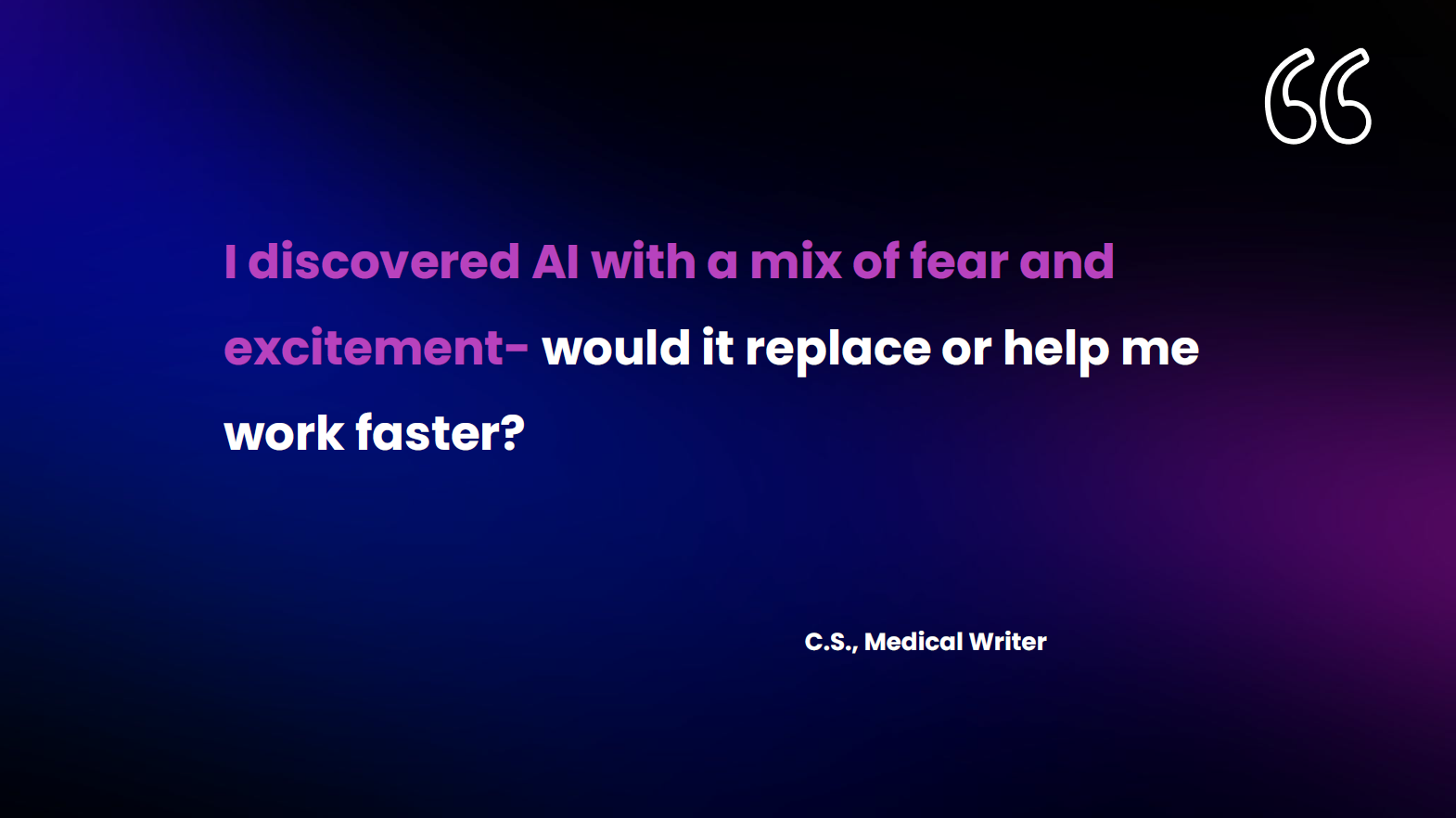
Emerging AI technologies can help reduce this internal communication gap by structuring how information flows between departments. AI systems can automatically transform clinical data outputs into structured narratives and standardized documentation formats. This enables:
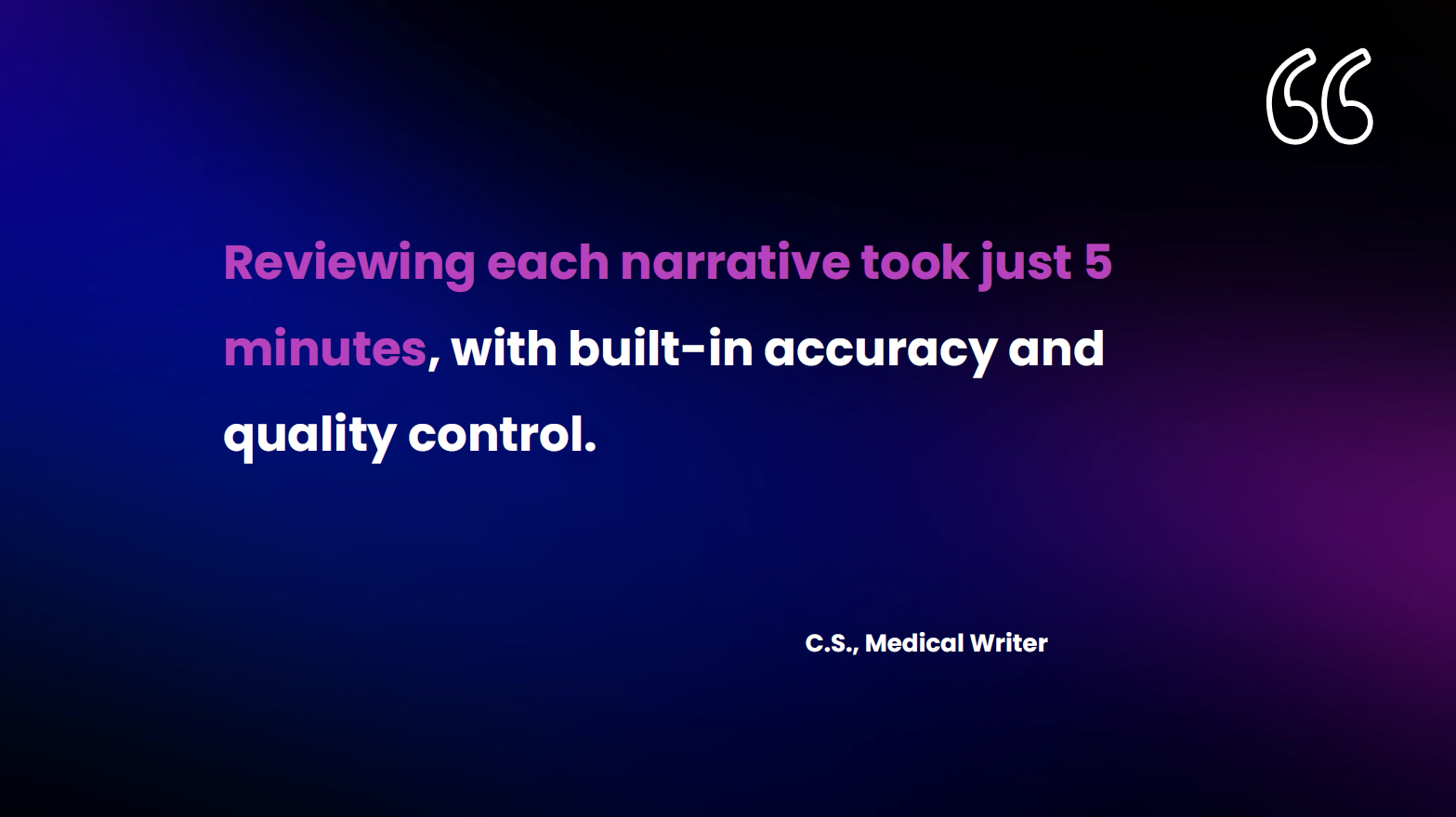
- Faster translation of statistical outputs into draft reports, allowing teams to focus on analysis rather than data formatting.
- Improved consistency across documentation, reducing the risk of errors and ensuring compliance with regulatory standards.
- Reduced manual formatting and rewriting, freeing up time for more strategic tasks.
- More efficient collaboration between teams, as AI systems facilitate real-time communication and updates.
Instead of spending time reconciling documents and data formats, clinical teams can focus on reviewing insights and making strategic decisions that drive the trial forward.
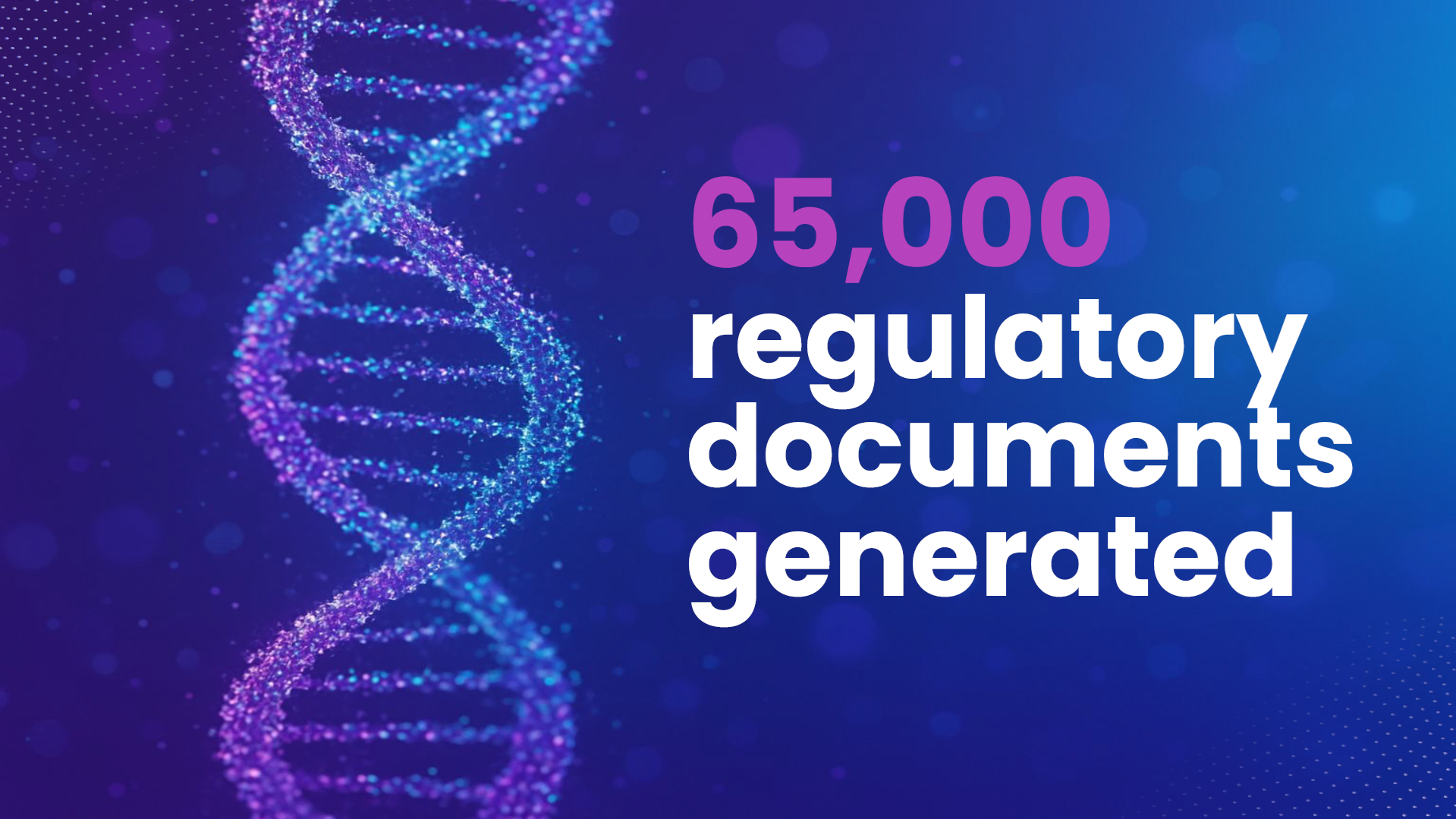
In 2025, Narrativa generated more than 65,000 regulatory compliance documents for pharmaceutical companies across multiple markets. This scale was made possible by the evolution of the platform into an agentic AI platform, designed to execute complex regulatory workflows autonomously.
How Narrativa helps close the documentation white space
Narrativa helps life sciences organizations bridge the internal white space between clinical teams by automating how data becomes documentation. Using agentic AI, Narrativa can:
- Convert statistical outputs into structured regulatory and clinical documents: Narrativa can transform tables, listings, and figures generated by biostatistics teams into clear draft narratives that medical writers can review and refine.
- Standardize documentation across teams: Structured templates and automated workflows ensure consistency across clinical reports, regulatory documents, and internal communications.
- Reduce repetitive document preparation: Automation minimizes the manual effort required to translate data into documentation.
- Improve collaboration across stakeholders: Structured, traceable content workflows enable smoother collaboration between clinical operations, biostatistics, medical writing, and regulatory teams.
By addressing the internal white space within clinical development organizations, AI platforms like Narrativa can enhance efficiency, reduce administrative burdens, and ultimately accelerate the clinical trial process.
About Narrativa
Narrativa® is the global leader in generative AI content automation. Through the no-code Narrativa® Navigator platform and the collaborative writing assistant, Narrativa® Sidekick, organizations large and small are empowered to accelerate content creation at scale with greater speed, accuracy, and efficiency.
For companies in the life sciences industry, Narrativa® Navigator provides secure and specialized AI-powered automation features. It includes complementary user-friendly tools such as Clinical Atlas, Narrative Pathway, R-Developer for TLFs, and Redaction Scout, which operate cohesively to transform clinical data into submission-ready regulatory documents. From database to delivery, pharmaceutical sponsors, biotech firms, and contract research organizations (CROs) rely on Narrativa® to streamline workflows, decrease costs, and reduce time-to-market across the clinical lifecycle and, more broadly, throughout their entire businesses.
The dynamic Narrativa® Navigator platform also supports non-clinical industries such as finance, marketing, and media. It helps teams drive measurable impact by creating high-quality, scalable content on any topic. Available as a self-serve SaaS solution or a fully managed service, built-in AI agents enable the production, refinement, and iteration of large volumes of SEO-optimized news articles, engaging blog posts, insightful thought leadership pieces, in-depth financial reports, dynamic social media posts, compelling white papers, and much more.
Explore www.narrativa.com and follow on LinkedIn, Facebook, Instagram, and X. Accelerate the potential with Narrativa®.