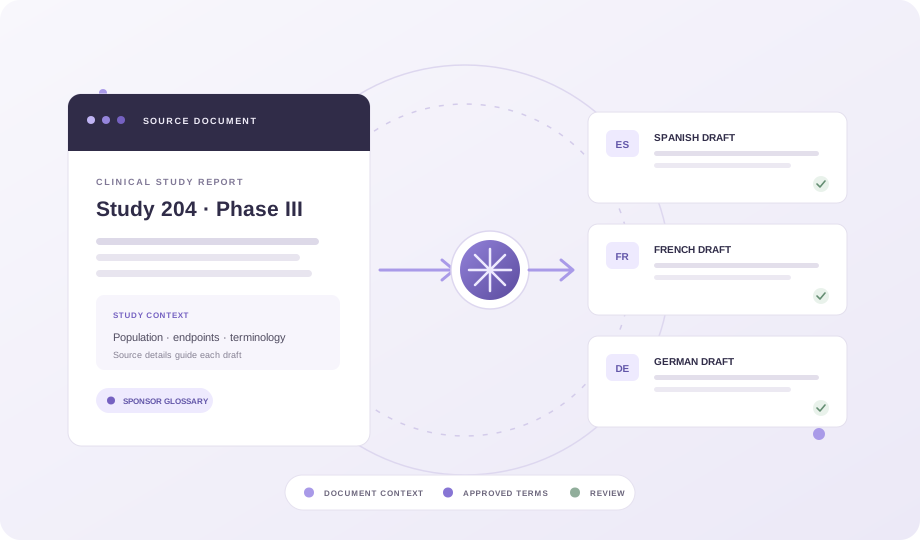
Bring the right context
Set the document type, source material, target language, sponsor instructions, and approved terminology for the translation task.
Extend medical writing across languages with AI-assisted translation informed by document context, approved terminology, and sponsor guidance—while medical.
TRUSTED BY LIFE SCIENCES ORGANIZATIONS
Support multilingual regulatory content with document-aware translation, controlled terminology, and expert review in the medical writing process.
Set the document type, source material, target language, sponsor instructions, and approved terminology for the translation task.
Generate a translation draft guided by the source, document context, and configured terminology—not just isolated sentences.
Medical writers and language experts review and refine translated content before it is approved for its intended use.
Clinical and regulatory documents carry study-specific language, structured content, and carefully defined meaning. Translating them calls for more than fluency: teams need the right source context, consistent terminology, and review by people who understand the document.
Regulatory Writing Translation brings generative AI translation into the Medical Coauthoring solution. Use document-specific instructions and glossaries to guide drafts for materials such as Clinical Study Reports, protocols, and Investigator Brochures, then keep medical writers central to review and refinement.

Help medical writing teams carry document meaning and approved terminology across multilingual content.
Use configured glossaries and sponsor guidance to support consistent terms across translated content.
Provide source material and document context to guide translation of scientific and regulatory writing.
Support clear, natural-language drafts while preserving the intended scientific meaning for expert review.
Apply the workflow to clinical and regulatory content such as CSRs, protocols, and Investigator Brochures.
Keep writers and qualified language reviewers responsible for refining and approving translated content.
Connect translation needs with the broader clinical document authoring and review process.
How AI-assisted translation fits into the Medical Coauthoring workflow.
It is an AI-assisted translation capability for clinical and regulatory writing within Medical Coauthoring. It helps teams prepare multilingual drafts using source material, document context, configured terminology, and sponsor instructions.
Translation complements clinical document authoring by supporting multilingual content alongside medical writing workflows. Medical writers remain involved in reviewing and refining the output for its intended use.
Teams can apply the approach to clinical and regulatory content such as Clinical Study Reports, clinical trial protocols, Investigator Brochures, and other sponsor-defined documents.
Translation instructions can include custom glossaries, preferred terminology, and sponsor-specific guidance. These inputs help guide consistent wording in the generated draft and should be checked by reviewers.
No. AI supports the translation process, but medical writers and appropriately qualified language reviewers remain responsible for assessing scientific accuracy, local requirements, and suitability for the intended use.
A translated draft requires review against the relevant study, sponsor, and regional requirements before it is used or submitted. The workflow supports drafting; it does not replace sponsor approval or any required linguistic validation.