Connect source evidence
Bring approved pharmacology, toxicology, clinical, and safety materials together with their source references.

Bring clinical and nonclinical evidence together in a clear, traceable Investigator Brochure—with specialized AI agents supporting drafting, updates, and.
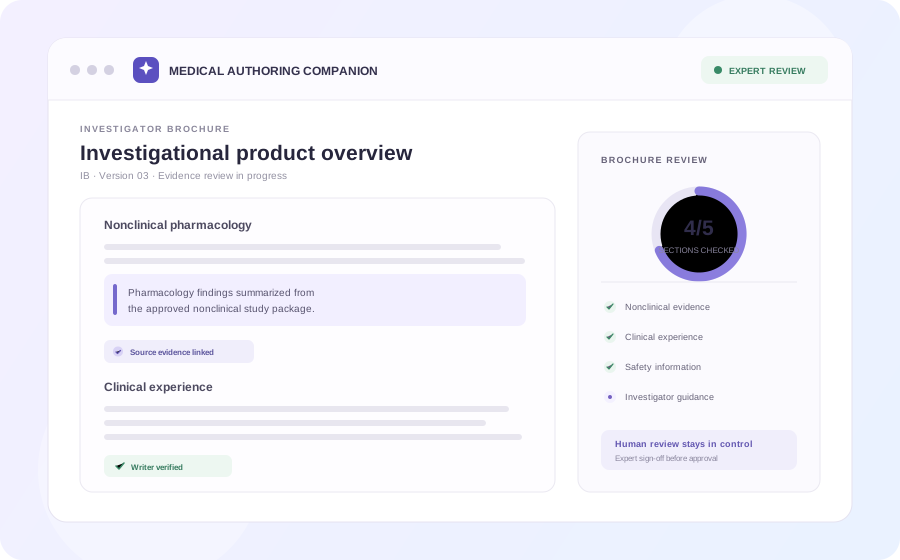
AI AGENTS TRUSTED BY LIFE SCIENCES ORGANIZATIONS






Specialized agents help medical writing teams assemble a coherent view of the investigational product—from source evidence and document structure to safety review and controlled updates.
Bring approved pharmacology, toxicology, clinical, and safety materials together with their source references.
Organize information into a consistent document framework so investigators can find key product and study details.
Support concise summaries of pharmacology, toxicology, and clinical experience grounded in the underlying evidence.
Bring known and potential risks, adverse reactions, and precautions into context for expert assessment.
Generate structured draft content with references that help writers verify statements against source documents.
Keep medical writers and subject-matter experts in control with quality checks, version tracking, and change review.
An Investigator Brochure (IB) gives investigators and study teams relevant clinical and nonclinical information about an investigational product. It brings together product background, pharmacology and toxicology findings, clinical experience, safety information, and guidance for investigators.
Medical Authoring Companion helps teams organize source materials, prepare structured drafts, and support updates as evidence evolves. Source-linked content and quality checks help reviewers verify consistency and completeness while medical writers and subject-matter experts retain control of scientific interpretation and approval.
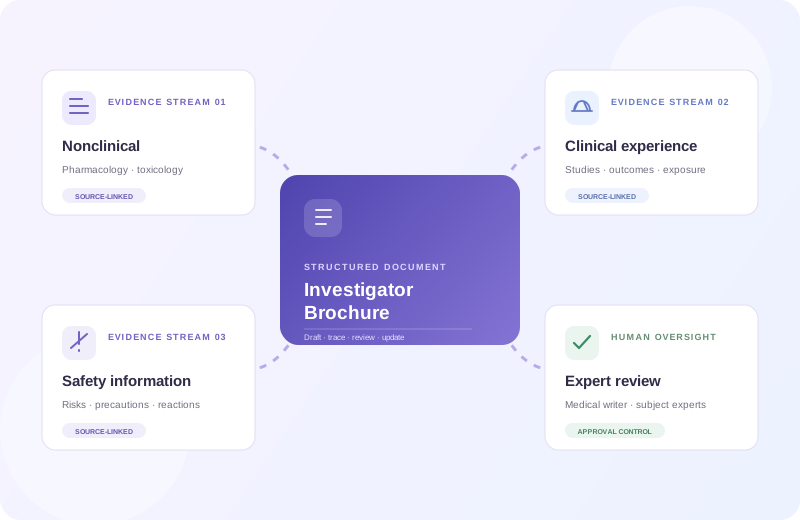
Learn how coordinated AI agents can support drafting, review, and maintenance of clinical evidence documents.
An Investigator Brochure is a reference document that compiles relevant clinical and nonclinical information about an investigational product for investigators and study teams. It typically brings together product and study background, pharmacology, toxicology, clinical experience, safety information, and guidance for investigators.
Specialized agents can help gather and organize source evidence, structure sections, summarize findings, draft content, and run consistency or completeness checks. Writers and subject-matter experts remain responsible for review, scientific interpretation, and approval.
Depending on the document and approved workflow, source materials may include pharmacology and toxicology reports, clinical study reports, safety data, protocols, product information, and prior approved brochure content. Teams define the appropriate sources for each project.
Generated content can be linked to its supporting source material, helping reviewers check the evidence behind statements and focus attention on passages that need confirmation or additional context.
Yes. Teams can use the workflow to incorporate new study findings and safety information into an existing document structure, compare content across versions, and support review of proposed changes. Experts retain control of the update and final approval.
AI agents provide drafting and review support; medical writers and designated subject-matter experts direct the work, verify source evidence, refine language, resolve review findings, and approve the final document.