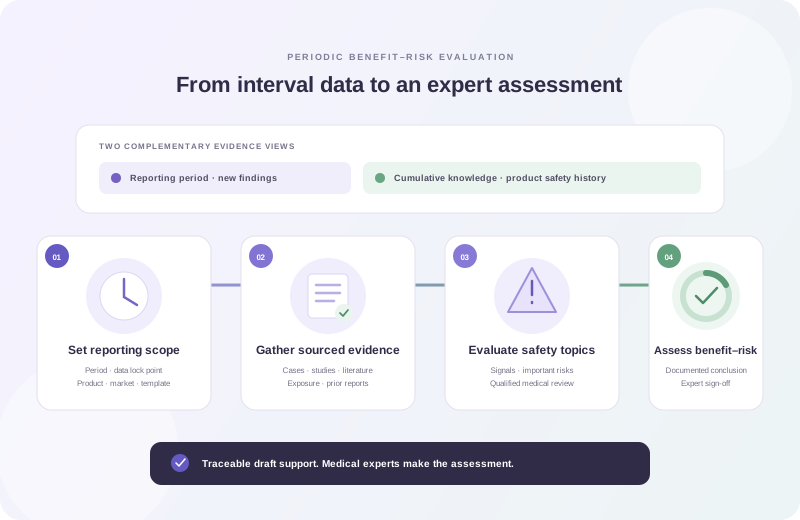
Define the reporting scope
Set the reporting interval and data lock point, and confirm the applicable product, market, and report requirements.

Bring periodic and cumulative safety evidence together for a structured PSUR/PBRER—with source-aware drafting, review support, and medical experts in.
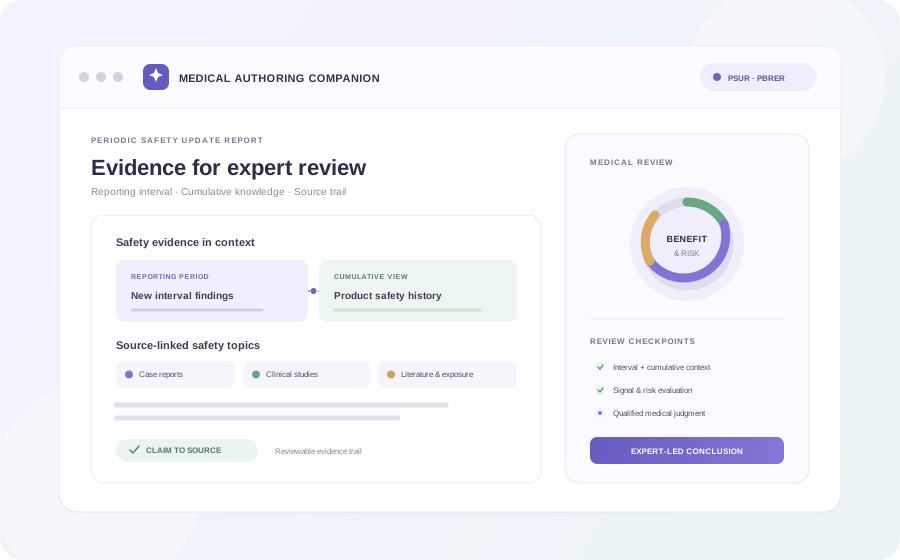
AI AGENTS TRUSTED BY LIFE SCIENCES ORGANIZATIONS






Purpose-built agents help pharmacovigilance and regulatory teams organize reporting-period evidence, build a traceable report draft, and prepare findings for expert assessment.
Set the reporting interval and data lock point, and confirm the applicable product, market, and report requirements.
Bring together approved sources such as case data, clinical studies, literature, and exposure information with provenance.
Organize new information, signal status, important risks, and actions so medical reviewers can evaluate context.
Bring relevant safety and efficacy evidence into context for a documented, medically led benefit–risk evaluation.
Organize source-grounded content into the required report structure and applicable company templates.
Support consistency, source traceability, and version review while qualified pharmacovigilance and medical experts retain approval.
A Periodic Safety Update Report (PSUR), also known in the ICH E2C(R2) framework as a Periodic Benefit-Risk Evaluation Report (PBRER), brings together safety information for an authorized medicinal product over a defined reporting period. It considers interval findings alongside cumulative knowledge and the product’s benefit–risk profile.
Medical Authoring Companion helps teams gather and organize approved safety evidence, prepare structured report drafts, and trace content to source materials. Pharmacovigilance and medical experts remain responsible for signal interpretation, benefit–risk conclusions, and final review against applicable requirements.
Learn how source-aware AI workflows can support report preparation and expert safety review.
A Periodic Safety Update Report is a pharmacovigilance document that presents and evaluates safety information for a medicinal product over a defined period. Under ICH E2C(R2), the Periodic Benefit-Risk Evaluation Report (PBRER) format supports periodic evaluation of the product’s benefit–risk profile using interval and cumulative information.
Agents can help organize approved source materials, structure report sections, draft source-grounded summaries, and run consistency or traceability checks. Pharmacovigilance and medical experts interpret the evidence, evaluate signals and benefit–risk, and approve report content.
Configured workflows may use approved case information, clinical and non-interventional study findings, literature, exposure data, reference safety information, previous reports, and other relevant product safety sources. Teams define the authoritative sources and reporting scope.
The report workflow can keep reporting-period information distinct from cumulative product knowledge, organize each with its reporting context, and connect summaries to source evidence. The applicable data lock point, cut-off, and requirements are set by the responsible team.
No. AI can help assemble and summarize evidence for review, but qualified medical and pharmacovigilance experts are responsible for interpreting safety information and reaching the benefit–risk conclusion.
Source links, structured drafting, and configured quality checks can help reviewers verify statements, identify inconsistencies, and manage versions. Final validation and submission readiness remain subject to the organization’s procedures and applicable regulatory requirements.