Drug substance manufacturing
Structure manufacturer details, starting materials, process descriptions, in-process controls, and process validation information for section 3.2.S.2.

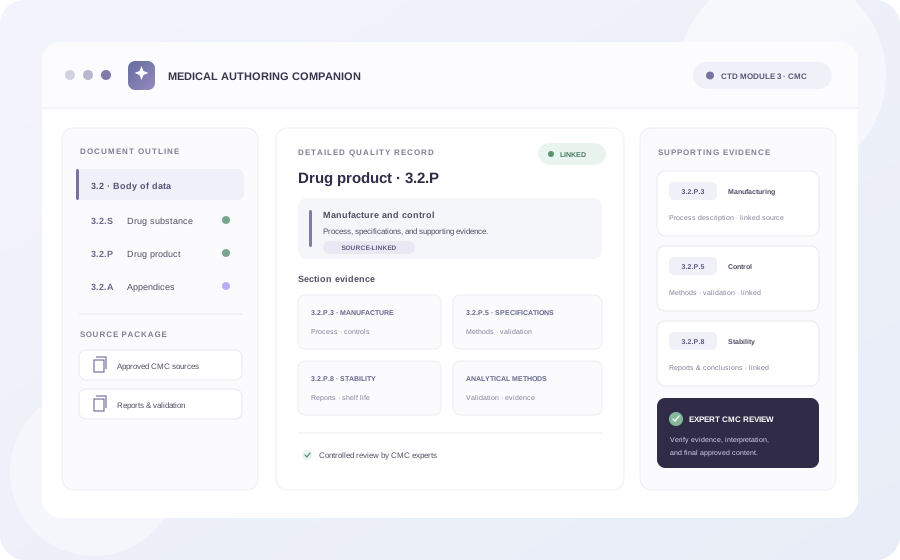
Build the detailed quality record behind the summary. Organize drug substance and drug product manufacturing descriptions, specifications, stability.
AI AGENTS TRUSTED BY LIFE SCIENCES ORGANIZATIONS






Module 3 contains the detailed quality information that supports the CTD. Work across the drug substance and drug product source sections, with traceable drafts and qualified CMC reviewers guiding each step.
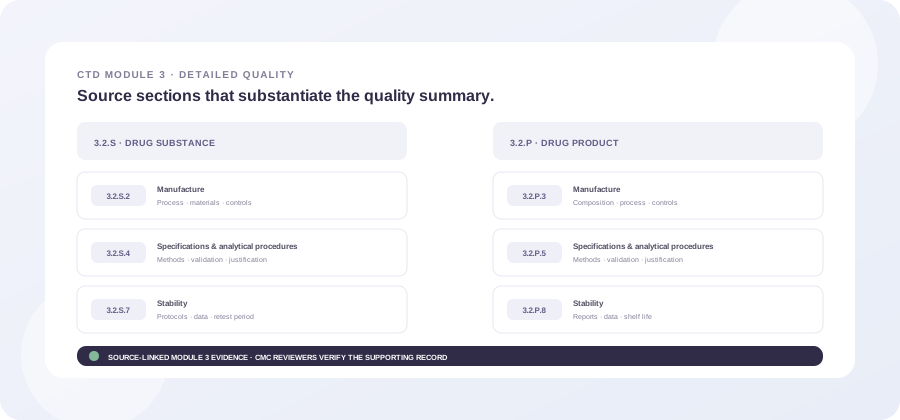
Structure manufacturer details, starting materials, process descriptions, in-process controls, and process validation information for section 3.2.S.2.
Bring specifications, analytical procedures, validation reports, and justifications together under the drug substance control section 3.2.S.4.
Organize stability protocols, study results, and proposed retest period or storage conclusions in section 3.2.S.7.
Describe composition, manufacturers, process steps, in-process controls, and process validation in section 3.2.P.3.
Compile specifications, analytical procedures, validation reports, and justification of specifications for section 3.2.P.5.
Bring stability protocols, reports, data, and shelf-life or storage conclusions together in section 3.2.P.8.
CTD Module 3 is the detailed quality module of a Common Technical Document. It contains the drug substance and drug product information needed to describe how a medicine is manufactured, tested, controlled, and supported by stability data.
Medical Authoring Companion helps teams structure these source sections, prepare drafts from approved materials, and keep claims connected to their supporting descriptions, specifications, reports, and validation records. CMC experts remain responsible for technical interpretation, verification, and approval.
Learn how source-aware workflows can support CMC authoring and review across the detailed quality module.
CTD Module 3 contains detailed quality information about the drug substance and drug product, including manufacture, control, specifications, analytical procedures, and stability, arranged according to the applicable CTD structure.
The page highlights drug substance manufacture (3.2.S.2), control (3.2.S.4), and stability (3.2.S.7), plus drug product manufacture (3.2.P.3), control (3.2.P.5), and stability (3.2.P.8). The applicable dossier scope depends on the product and submission.
Analytical procedures and their validation information are presented within the relevant control sections, including drug substance section 3.2.S.4 and drug product section 3.2.P.5. The specific records and subsection structure follow the applicable CTD requirements.
Module 3 holds the detailed supporting quality information. CTD Module 2.3 summarizes that information at a higher level. Source links and cross-document checks can help reviewers move between the concise summary and its underlying evidence.
Configured agents can help organize approved source materials, draft structured sections, retain source references, and flag potential gaps or inconsistencies for review. CMC and regulatory experts verify the content and approve the submission.