Bring research evidence together
Organize approved study reports, analysis outputs, tables, figures, and references that support the publication.

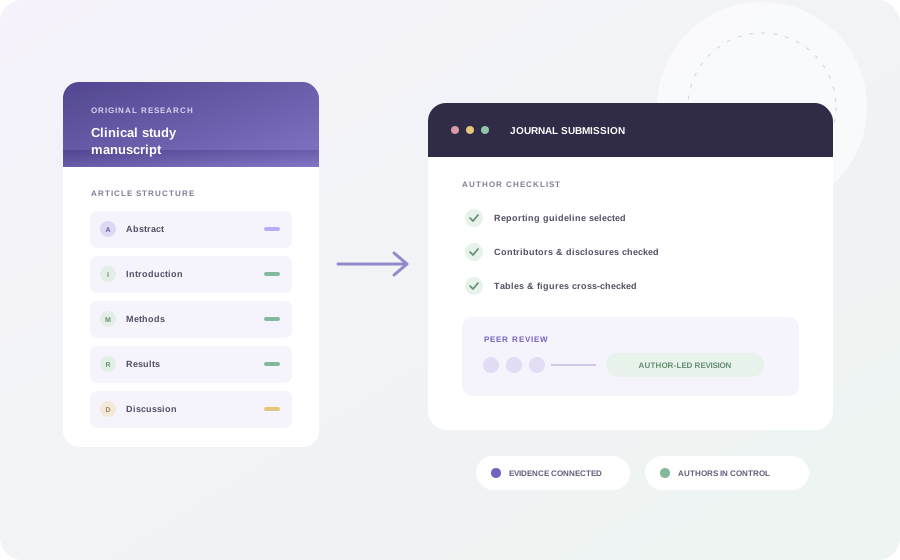
Bring evidence, reporting standards, and author feedback together while researchers stay responsible for the science and the story
AI AGENTS TRUSTED BY LIFE SCIENCES ORGANIZATIONS






From study outputs to journal submission, agents can help teams organize evidence, follow reporting expectations, and prepare a focused manuscript. Authors guide interpretation, confirm contributions, and approve every version.
Organize approved study reports, analysis outputs, tables, figures, and references that support the publication.
Build a concise abstract and a coherent introduction, methods, results, and discussion in the target journal’s format.
Support checks against relevant guidance, such as CONSORT for clinical trials and journal-specific instructions.
Keep claims, reported values, and displayed tables or figures aligned with the underlying study evidence.
Coordinate contributor roles, disclosures, acknowledgments, and publication-practice requirements for author confirmation.
Coordinate submission-ready files and author responses as the manuscript moves through peer review and revision.
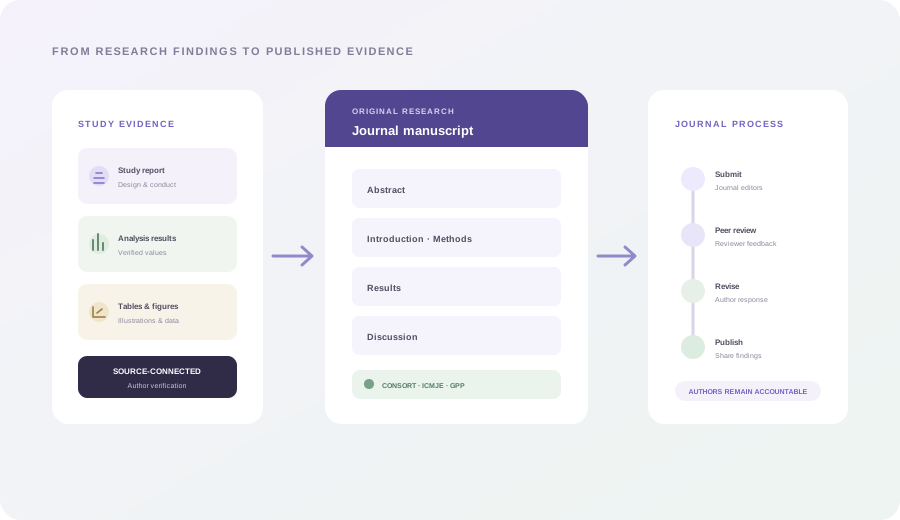
A journal manuscript communicates findings from a clinical trial or other research study to journal editors, peer reviewers, and the scientific community. It typically follows journal requirements and a structured format—abstract, introduction, methods, results, and discussion—and uses relevant reporting guidance such as CONSORT for clinical trials.
Unlike a Clinical Study Report, a manuscript is a shorter publication focused on communicating research and contributing to the evidence base, rather than supporting a regulatory approval decision. Authoring workflows can help organize evidence, align content with journal requirements, and manage revisions; authors retain accountability for accuracy, interpretation, authorship, and the final submission, in line with applicable ICMJE and GPP guidance.
Learn how AI-assisted authoring can support manuscript development while researchers remain accountable for their work.
A manuscript is a scientific paper prepared for publication in a peer-reviewed journal. In pharma and clinical research, it commonly reports findings from a clinical trial or other study for journal editors, reviewers, and the wider scientific community.
A Clinical Study Report is a detailed regulatory document supporting review of a clinical study. A journal manuscript is shorter and shaped for scientific publication: it communicates selected study findings to peers and contributes to the published evidence base, rather than seeking regulatory approval.
Many original research manuscripts include an abstract, introduction, methods, results, and discussion, subject to the target journal’s instructions. Clinical trial reports commonly follow CONSORT and its relevant extensions; authors should use the guidance applicable to their study design.
Authors and sponsors should follow journal requirements, applicable ICMJE recommendations for authorship and contributor accountability, and relevant Good Publication Practice (GPP) guidance. Contributor roles, disclosures, funding, and any required transparency statements should be confirmed by the responsible authors.
Agents can help organize approved evidence, prepare structured drafts, check alignment between narrative and study outputs, and coordinate journal-specific files or revisions. Teams should review AI use against target journal policies and keep human authors responsible for the work.
The journal may conduct an editorial assessment and send the paper for peer review. Authors then address editor and reviewer comments, revise the manuscript, and resubmit until the journal reaches a decision. Accepted work proceeds to publication.
The listed human authors are accountable for the manuscript’s accuracy, integrity, interpretation, authorship statements, and final approval. AI tools may assist with preparation, but they do not qualify for authorship or replace author responsibilities.