Assemble study sources
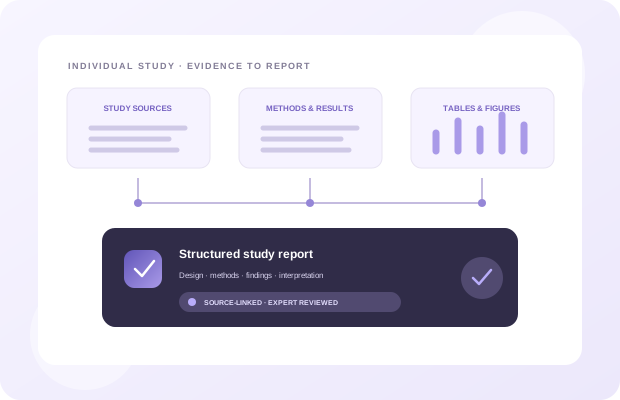
Bring approved protocols, raw or derived study data, pathology materials, and supporting documents into a traceable authoring workflow.

Turn complex pharmacology, pharmacokinetics, and toxicology study materials into clear, structured report drafts—with source-linked evidence and expert review at every step.
AI AGENTS TRUSTED BY LIFE SCIENCES ORGANIZATIONS






Support the journey from approved study materials to a review-ready report. Agents help structure study information, assemble source-grounded content, and surface checks—while study directors and scientific experts guide interpretation and conclusions.
Bring approved protocols, raw or derived study data, pathology materials, and supporting documents into a traceable authoring workflow.
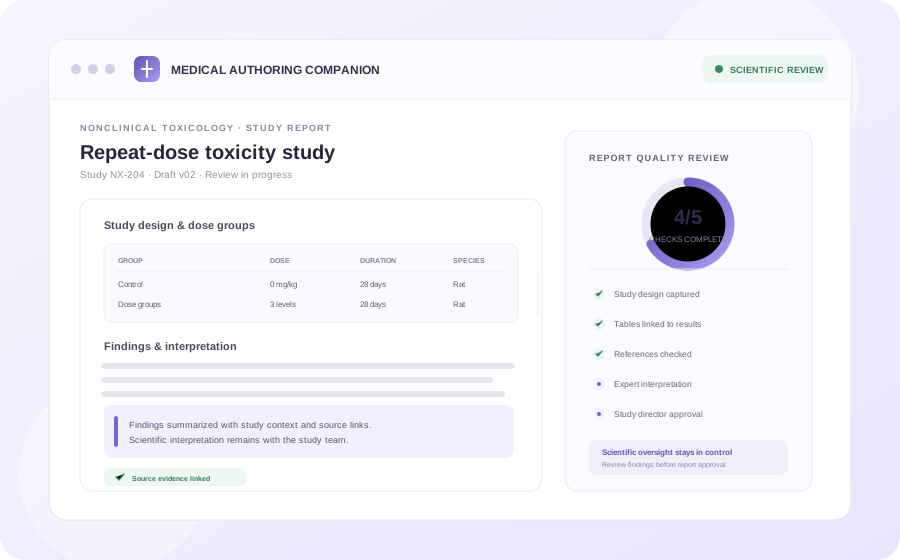
Organize species, study groups, dose levels, route, duration, endpoints, and deviations into a consistent report framework.
Bring together observations, measurements, and analysis outputs with their study context and supporting data references.
Structure observations by dose group, timing, and organ system so reviewers can assess the evidence in context.
Prepare structured report sections with references that let authors verify statements against the source report, data, or output.
Surface gaps, inconsistencies, and reference issues for review while study directors and experts retain control of scientific conclusions.
A nonclinical study report presents the objectives, methods, results, and interpretation of an individual study. Depending on the study, the report may cover pharmacology, pharmacokinetics and ADME, toxicology, safety pharmacology, or other supporting work. Detailed study reporting preserves the context needed to understand the findings and assess their relevance.
Medical Authoring Companion helps teams organize approved study information, prepare structured drafts, and connect narrative statements to supporting tables, data, and source documents. It can support consistency and completeness checks across report sections; study directors and qualified scientific experts remain responsible for data verification, interpretation, conclusions, and approval.
Learn how AI-assisted authoring can support traceable, review-ready nonclinical study reports.
A nonclinical study report documents an individual study’s objectives, design, methods, results, and interpretation. Depending on its purpose, it may report pharmacology, pharmacokinetics, toxicology, safety pharmacology, or other nonclinical work and provide the detailed evidence used in regulatory submissions.
Agents can help organize approved source materials, structure report sections, prepare evidence-grounded draft content, and support consistency or completeness checks. Authors and study experts verify the content, interpret the findings, and approve the report.
Depending on the study and sponsor workflow, source materials may include the protocol and amendments, study data and analysis outputs, pathology materials, bioanalytical results, quality documentation, and relevant supporting reports. The responsible team defines and approves the source set.
Structured sections can capture study objectives, design, test system or species, dose groups, route and duration, endpoints, methods, results, deviations, and interpretation. The appropriate content depends on the type of study and applicable standards.
Draft statements can be linked to supporting source documents, tables, or data outputs. Reviewers can use those references to verify reported values, assess context, and identify content that needs clarification or correction.
AI supports information organization, drafting, and review checks; it does not replace qualified scientific judgment. Study directors and appropriate experts assess findings, determine their significance, develop conclusions, and control final review and approval.
Individual study reports provide detailed methods and results. The CTD Nonclinical Overview (Module 2.4) integrates and critically assesses relevant nonclinical evidence across studies. Clear source links between the detailed reports and higher-level summaries help reviewers follow the evidence.